Deepfake Scams and Vishing: Recognize a Fake Voice
Your phone rings during a meeting. The number is unknown, but the voice sounds familiar. "Hi, I am in the car and cannot talk long. I need you to send the advance payment today. The details are in your email." It sounds like your CEO. The tone fits. The rhythm fits. Even the short phrases sound right.
But the CEO knows nothing about it.
This is what a deepfake scam combined with vishing can look like. Vishing is voice phishing, a scam delivered through a phone call. A deepfake voice or voice cloning adds something people trust strongly: a familiar voice.
Deepfake scams are not only about technology. They are about trust, stress and fast decisions. The attacker does not want you to think. They want you to react.
This does not mean we should become paranoid. It means important decisions need verification, especially when money, access, personal data or sensitive business information is involved.
For a broader context, read AI as an Attacker: Phishing, Deepfakes and New Cyber Threats.
Deepfake scams and vishing use the same logic as AI phishing: the attacker creates a believable story and pushes the victim into a fast decision. Public information from OSINT often helps prepare that story.
What is a deepfake?
A deepfake is artificially created or modified audio, image or video that imitates a real person. With AI, attackers can create a voice that sounds like a specific person or a video where the face and expressions look highly convincing.
Sometimes a relatively small voice sample is enough. A public talk, podcast, conference video, YouTube interview, online training or short social media clip can provide useful material.
That makes the digital footprint a practical security topic. Public videos, profiles, conference photos and posts can support both OSINT research and deepfake preparation.
That is why the risk is not limited to celebrities. Managers, business owners, teachers, doctors, real estate agents, salespeople, influencers and anyone with public video or audio recordings can be targeted.
What is vishing?
Vishing is voice phishing. Through a phone call or voice message, the attacker tries to convince the victim to do something harmful or risky.
Typical goals include:
- transferring money,
- sharing an SMS code,
- confirming a payment,
- changing a bank account,
- revealing a password,
- installing an application,
- providing personal data,
- opening a link sent by SMS.
Vishing existed before AI. Scammers called people and pretended to be a bank, police or technical support. AI adds a new layer of credibility: the voice can sound like someone you know.
How a deepfake scam can look
CEO fraud
An employee receives a call or voice message from someone who sounds like the director. The caller says they are in a meeting, cannot write and need an invoice paid urgently. The situation feels trustworthy because the voice is familiar and the request looks like a work priority.
Finance department fraud
The attacker pretends to be a supplier or manager and asks for a bank account change on an invoice. Without a clear verification process, an employee may make the change in good faith.
Family emergency scam
A parent receives a call from a voice that sounds like their child. The caller claims they had an accident, lost a phone, are in trouble or need money quickly. The goal is panic and no verification.
Video call fraud
There have been public cases where employees believed a video call with fake managers and sent large sums of money. These attacks show that deepfake video is not theoretical. It can affect real companies.
Warning signs of a fake voice or video
A deepfake does not have to be perfect. It often has small flaws. The problem is that stress makes those flaws harder to notice.
Watch for these signals:
- the caller creates strong time pressure,
- they do not want you to verify with anyone else,
- they request an unusual payment or account change,
- they claim the matter is secret or sensitive,
- they refuse to switch to another communication channel,
- responses feel slightly delayed or unnatural,
- the voice sounds right but the emotions do not fit,
- video has strange lip, eye or facial movements,
- call quality is intentionally poor,
- the person avoids unexpected questions.
The most important signal is not technical. It is the combination of a trusted identity and an urgent request. When someone familiar asks for something important very quickly, slow down.
How to verify a suspicious call
The best defense against deepfake scams is verification through a second channel.
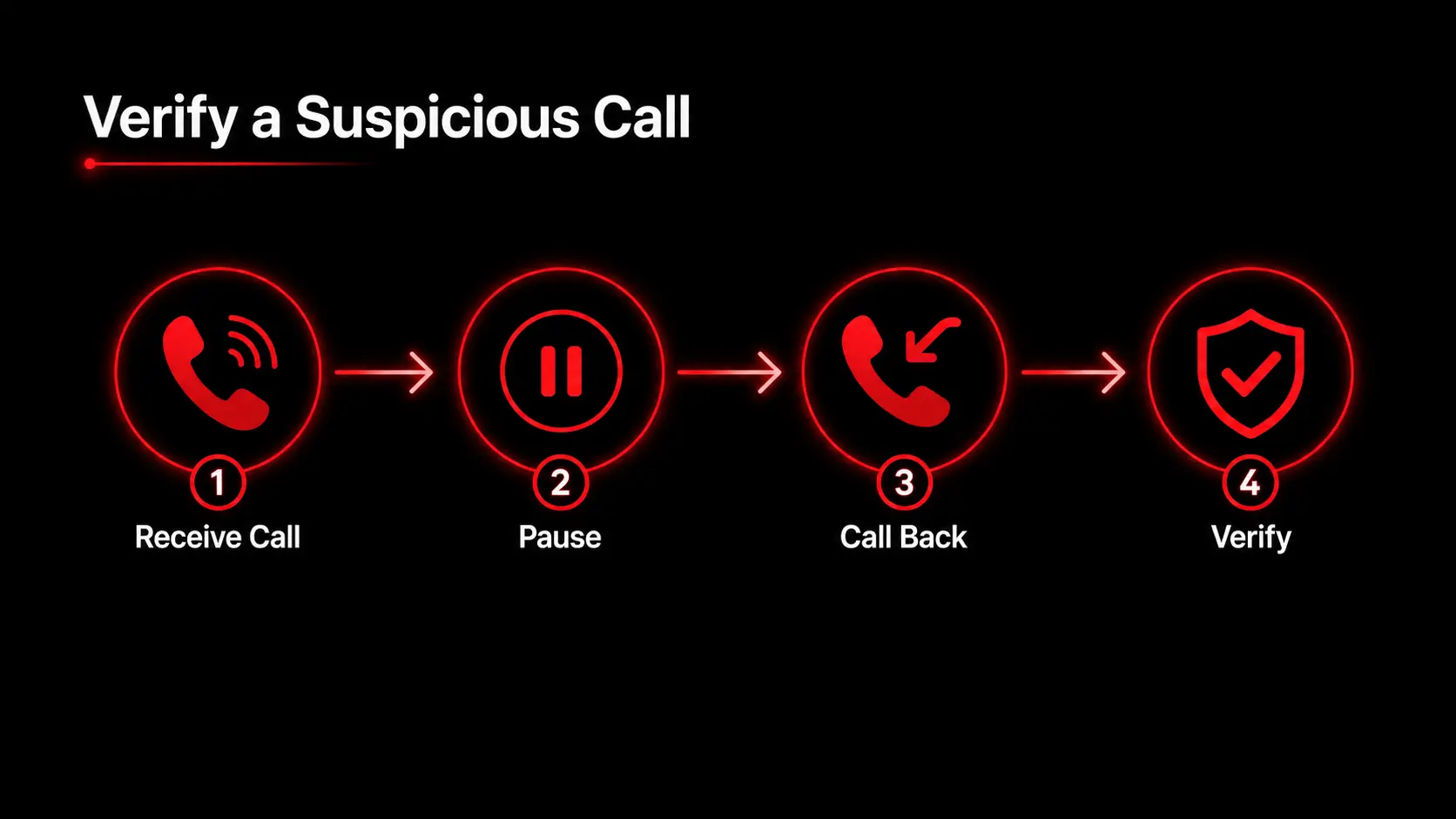
If a "CEO" calls and asks for payment, hang up and call back using a number you already know. Do not call the suspicious number back. If a "colleague" writes from an unknown number, verify through company chat. If a "child" calls in panic, ask a question only they would know.
Companies should also introduce security phrases or verification rules. Urgent payments should require a second approval. Supplier bank account changes should be verified through the original registered contact. Sensitive requests should never rely only on a voice message.
What companies should do
Companies should stop treating deepfake fraud as a curiosity. It is part of modern security reality.
Practical measures:
- Set rules for urgent payments. No payment should be made based only on a phone call.
- Use dual approval for higher amounts.
- Verify supplier bank account changes through an independent contact.
- Train people on vishing and deepfake scenarios.
- Limit public sharing of sensitive internal information.
- Create a simple process for reporting suspicious calls.
- Teach employees that verification is not distrust. It is a professional standard.
What families should do
Deepfake voice scams are not only a business risk. The risk is growing for families too.
Agree on simple rules:
- a family password for emergencies,
- a rule that money is never sent under pressure,
- verification through a callback,
- questions only a family member would know,
- no sharing of codes or personal data through messages.
Older people can be especially vulnerable to calls that create fear. It is better to discuss these scenarios before an incident, not after one.
Conclusion
Deepfake scams are dangerous because they attack trust. Voice and face are things we naturally believe. AI can abuse that trust.
The basic rule is simple: for money, passwords, accounts and sensitive data, voice is not enough. You need verification.
There is no shame in saying: "I will verify this and get back to you." That sentence can save money, a company and personal data.